

Table of Contents
Minneriya National Park introduction
In Sri Lanka’s dry zone, not far from the ancient rock fortress of Sigiriya, an ancient reservoir quietly hosts one of the greatest wildlife events on Earth. Every year, hundreds of wild Asian elephants converge on the shores of the Minneriya Tank in what’s known simply as “The Gathering” — and it’s one of the most rewarding half-day safaris you can take while touring Sri Lanka’s Cultural Triangle.
If you’re planning a trip and wondering whether Minneriya belongs on your itinerary, here’s everything you need to know.
What Makes Minneriya National Park Special
Minneriya National Park covers roughly 89 square kilometers in Sri Lanka’s North Central Province. At its center sits the Minneriya Tank, a reservoir built around 1,700 years ago by King Mahasen to store water through the dry months. That ancient engineering still shapes the region’s wildlife today.
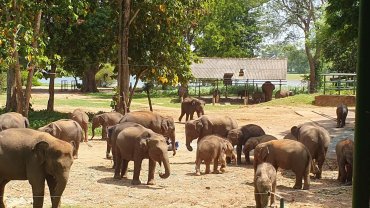
As the surrounding landscape dries out between June and October, water becomes scarce almost everywhere except the tank. Elephant herds from neighboring areas — including Wasgamuwa and Kaudulla — travel along natural elephant corridors toward Minneriya, where they can drink, bathe, graze on the fresh grass exposed by the shrinking waterline, and socialize with other herds.
The result is a spectacle rarely seen anywhere else: dozens of elephant families sharing the same open grassland at once, with calves playing in the shallows while adults feed nearby.
The Elephant Gathering: What to Expect
This isn’t a managed sanctuary or a staged encounter — every elephant at Minneriya is fully wild, moving on its own instinct. That’s part of what makes it special, but it also means numbers vary from year to year and month to month.
Here’s a general pattern based on the season:
| Period | Typical Elephant Numbers | What’s Happening |
|---|---|---|
| June – July | 50–100 | Early arrivals, smaller herds, fewer crowds |
| August – September | 150–300+ | Peak gathering, largest herds of the year |
| October | 100–250 | Numbers begin tapering as rains approach |
| November – May | 10–30 | Off-season; elephants disperse into the wider forest |
On a strong day at the peak of the season, visitors have reported herds well above 200 animals in a single sighting — grazing, bathing, and moving together across the exposed lakebed.
Best Time for a Safari
Most guides agree on two things: visit during the dry season, and go in the late afternoon.
- Best months: August and September, when water levels are lowest and herds are largest
- Good alternative months: July and October, with smaller crowds and still-strong sightings
- Best time of day: Between 3:00 PM and 6:00 PM, when elephants move out to feed before dusk and the light is ideal for photos
- Off-season option: If you’re visiting outside June–October, nearby Kaudulla National Park often has better elephant activity
Because Minneriya doesn’t require an overnight stay, it’s an easy add-on for anyone already exploring Sigiriya, Dambulla, or Polonnaruwa — most visitors combine it with a day trip from the Cultural Triangle.
Planning Your Safari Jeep Tour
A few practical tips before you book:
- Book a licensed jeep and tracker. Local trackers know where herds are moving that day and can position your jeep for a clear, respectful viewing distance.
- Arrive early for your slot. Afternoon safaris fill up fast during peak season, and traffic near the park entrance can build up quickly once the gathering is in full swing.
- Bring a zoom lens or binoculars. Rangers keep a safe distance from the herds, so a longer lens makes a real difference for photos.
- Pack for dust and sun. Jeep tracks get dry and dusty in the gathering season — a hat, sunglasses, and a light scarf go a long way.
- Respect the wildlife. Keep noise low and stay inside the vehicle; these are wild, free-roaming elephants, not a controlled exhibit.
Beyond Elephants: Other Wildlife at Minneriya
While the elephants are the headline, the park’s mix of forest, grassland, and wetland supports a wide range of species, including:
- Sambar deer and spotted deer
- Wild buffalo
- Toque macaques and purple-faced langurs
- Painted storks, herons, cormorants, and pelicans around the tank
- Occasional sightings of leopard and sloth bear, though these are rare
Birdwatchers often find Minneriya just as rewarding as elephant-spotters, particularly around the reservoir’s shallow edges.
How to Get There
Minneriya National Park sits on the Habarana–Polonnaruwa road, roughly:
- 25–30 minutes from Sigiriya or Habarana
- About 2.5–3 hours from Kandy
- Around 4–5 hours from Colombo
Because of this location, most travelers pair a Minneriya safari with visits to Sigiriya Rock Fortress, Dambulla Cave Temple, or the ancient city of Polonnaruwa as part of a Cultural Triangle circuit.
Frequently Asked Questions
What is “The Gathering” at Minneriya National Park?
The Gathering is the seasonal congregation of wild Asian elephants around the Minneriya Tank during the dry season, widely regarded as the largest known gathering of Asian elephants anywhere in the world.
When is the best month to see elephants at Minneriya?
August and September typically offer the largest herds, though good sightings are common from July through October.
Can I see elephants at Minneriya outside the dry season?
Yes, smaller numbers are visible year-round, but from November to May many herds disperse to other parks, so nearby Kaudulla National Park may offer better viewing.
How long does a Minneriya safari take?
Most jeep safaris run 3 to 4 hours, typically scheduled in the late afternoon for the best light and elephant activity.
Is Minneriya suitable for a day trip from Sigiriya or Kandy?
Yes — its location near the Cultural Triangle makes it an easy half-day add-on to a Sigiriya, Dambulla, or Polonnaruwa itinerary.
Ready to See the Gathering for Yourself?
Watching hundreds of wild elephants share a single reservoir at dusk is the kind of moment that’s hard to describe secondhand. If you’re planning a Cultural Triangle itinerary, book your Minneriya safari jeep tour through Lanka Tour Host and let a local guide put you in the right place at the right time.


Comment (0)