

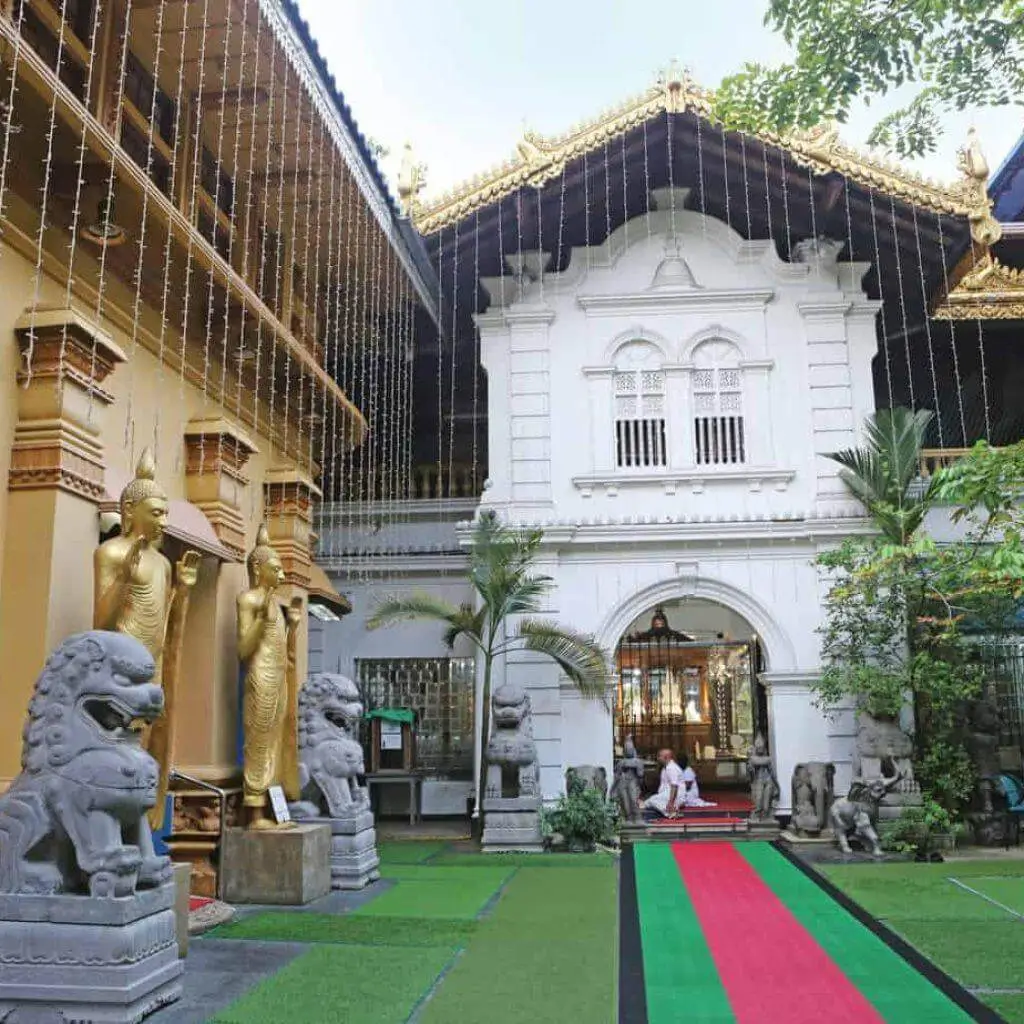
The Temple of Gangaramaya is the most visited temple in the city. The Gangaramaya Temple organizes Sri Lanka’s largest and most colorful Vesak festival every year, and it has a history of more than 140 years. It was established in 1885 by Venerable Hikkaduwe Sri Sumangala Nayaka Thera at a time when Buddhist and cultural resurgence was much needed as the country was under colonial rule.
The area was once a swamp beside Beira Lake. It has now become an iconic complex that consists of the temple, the assembly hall on the lake and the vocational training institute. Earlier, devotees had to cross the Beira Lake on a boat in order to reach the then small temple which was turned into what it is today by the Devudara Sri Jinarathana Nayaka Thera, a pupil of Venerable Hikkaduwe Sri Sumangala Nayaka Thera who appointed him as the chief incumbent of the temple.
Annual Perahera (Procession)
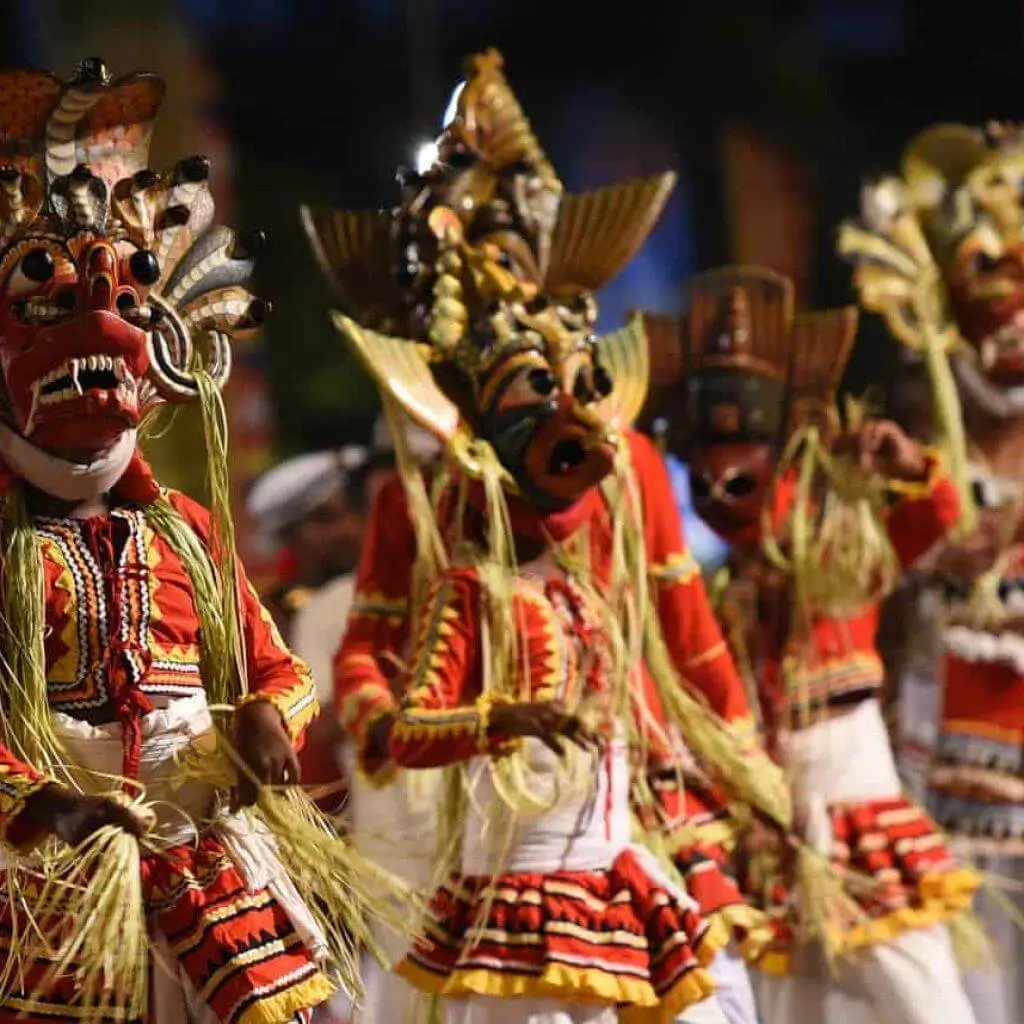
One of the grandest festivals of the Gangaramaya Temple, the Nawam Perahera (Procession), the inception of which dates back to 1979, is held annually in the month of February, displaying the rich religious and cultural tradition of Sri Lanka. It is quite a fascinating sight that hundreds of elephants nicely adorned with elegant costumes walk with pride and dignity carrying the casket of the sacred relics while many troupes of traditional drummers, flutists, dancers, and other traditional performers and hundreds of Buddhist monks clad in colorful robes, parade in the perahera.
The Gangaramaya Nawam Perahera (Procession), a colorful pageant in the city of Colombo, plays a big role in preserving Buddhist culture and passing it on to future generations. The Perahera attracts thousands of people not only from the whole island but also beyond the ocean as it is popular throughout the world.
Buddha Rashmi National Vesak Festival
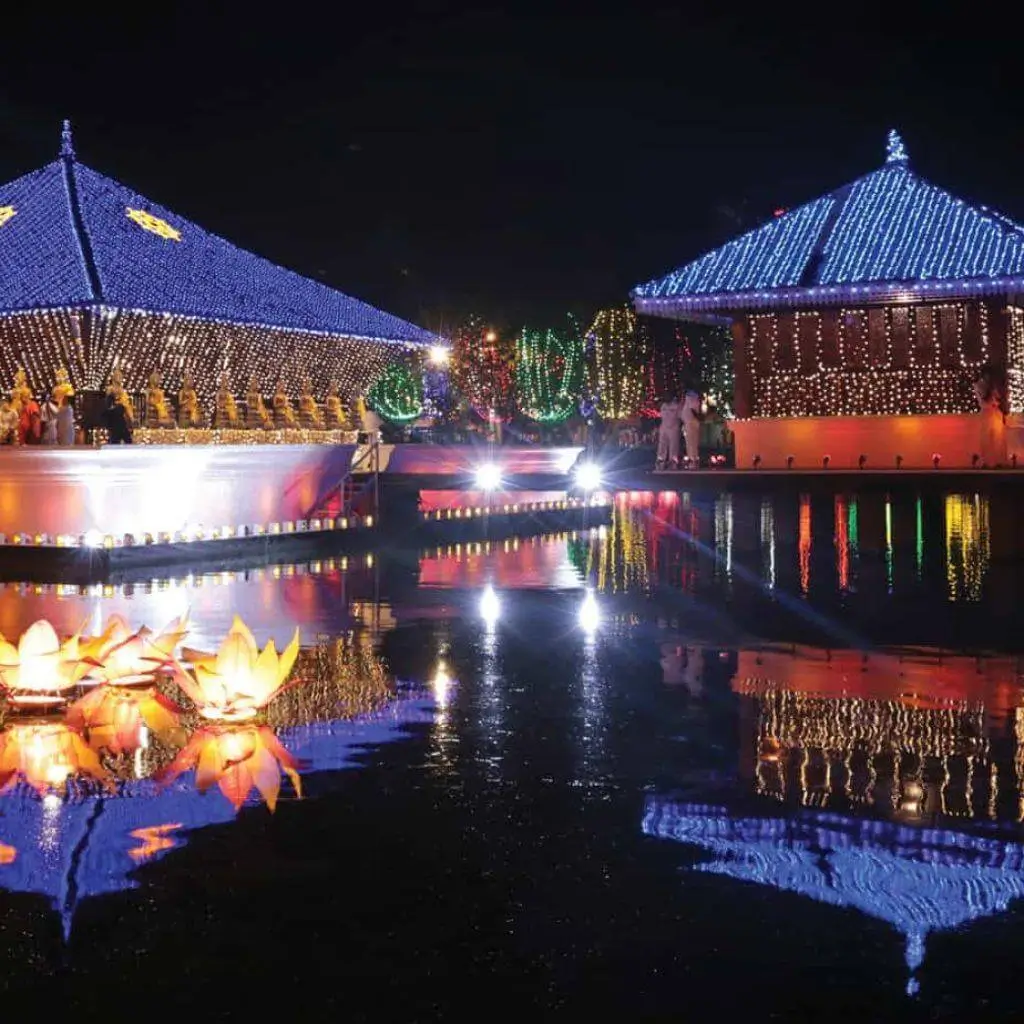
Yet another grand festival held by the Gangaramaya Temple in commemoration of the Birth, Enlightenment, and Passing-away of the Lord Buddha, is the annual Vesak Festival known as ‘Buddha Rashmi Pooja’, the largest and most visited Vesak festival on the Island. During this colorful festival, the temple and the area around it turn into a sparkling wonderland, with thousands of beautifully crafted and illuminated Vesak lanterns, some of which float on Beira Lake, and millions of lights on the trees around and on the Seema Malaka, all adding to the Buddha Rashmi Pooja.
In addition, a number of religious observances and events are held alongside the Vesak festival with a view to improving the knowledge of the devotees on Buddhism.
Social Services
A temple well-known for its unparalleled social service, the Gangaramaya Temple, led by the Venerable Galaboda Gnanissara Nayaka Thera, is always committed to the social well-being of the masses. The conscientious endeavors of ‘Podi Hamuduruwo’ to support the needy are really appreciable and commendable. It is worth mentioning that Ven. Dr. Kirinde Assaji Thera, a towering strength to ‘Podi Hamuduruwo’, plays a big role in all these worthy causes.
Some of the temple’s enormous social services are community development projects e.g. Na Sevana, vocational training centers, orphanages for the street children, homes for the differently-abled and the elderly, homes for the abandoned, publication of Buddhist literature, helping to develop thousands of rural temples, cultivation projects, and many more.
Museum
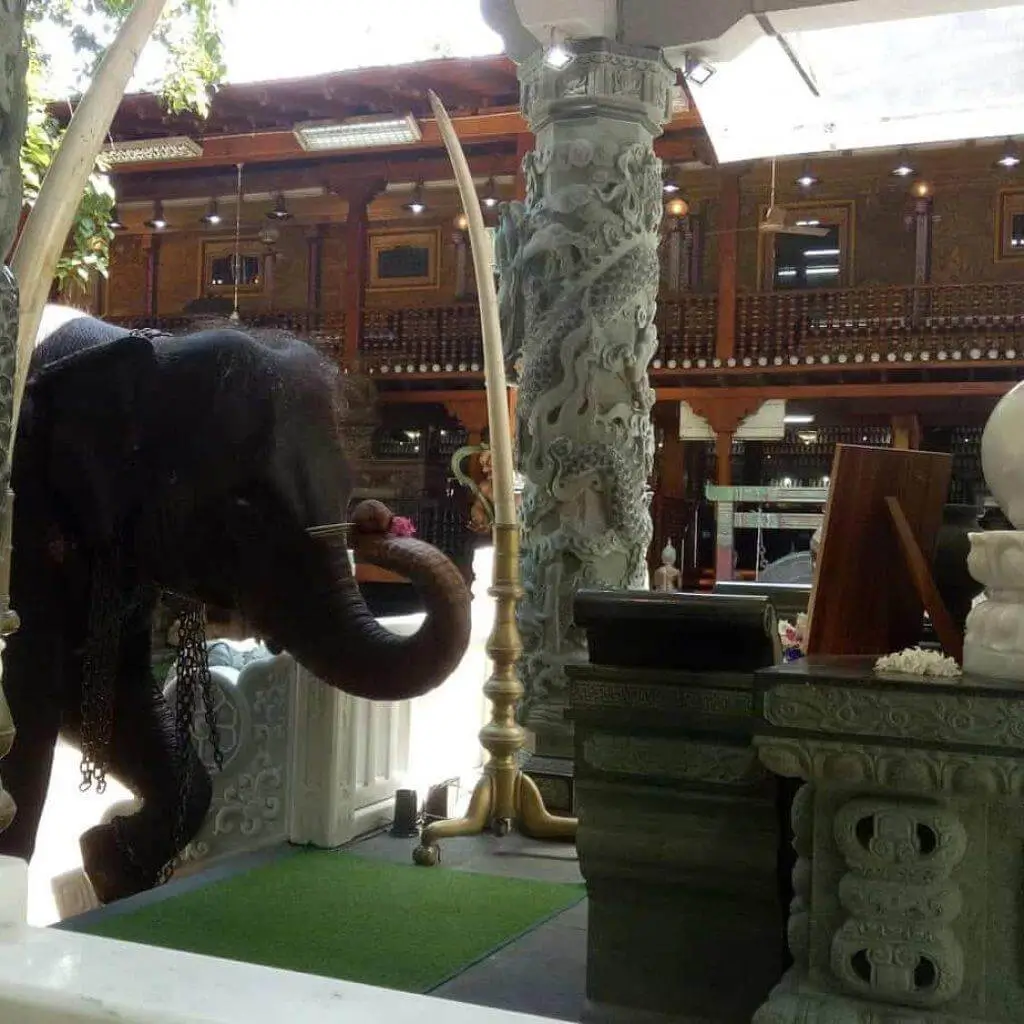
The museum was started by Sri Jinarathana Nayaka Thera as a collection of artifacts and other objects of religious, cultural, and historical value. It was developed into what it is today by Ven. Galaboda Nayaka Thera with the help of devotees and donors here and abroad particularly in the Asian region. Today the museum is replete with a range of ageless treasures from ancient Sri Lanka as well as around the globe, including valuable Buddha statues of different influences, ancient ola-leaf manuscripts, old coins, vehicles, and other relics in a classic display of art, tradition, and culture.
 1 Day
 13 Days 12 Nights
 1 Day


Comment (0)